
The attractiveness of a building is more than just aesthetics. Cost-effective and environmentally friendly features are appealing to business owners and customers alike. Additionally, such details can cut energy costs. When customers see companies are environmentally responsible and making energy-saving efforts, they become repeat customers. It’s a win-win situation for everyone. When designing a captivating, eco-friendly interior, there are a few elements architects should consider. Today, we offer 10 tips to keep in mind when creating a welcoming, inspiring business space.
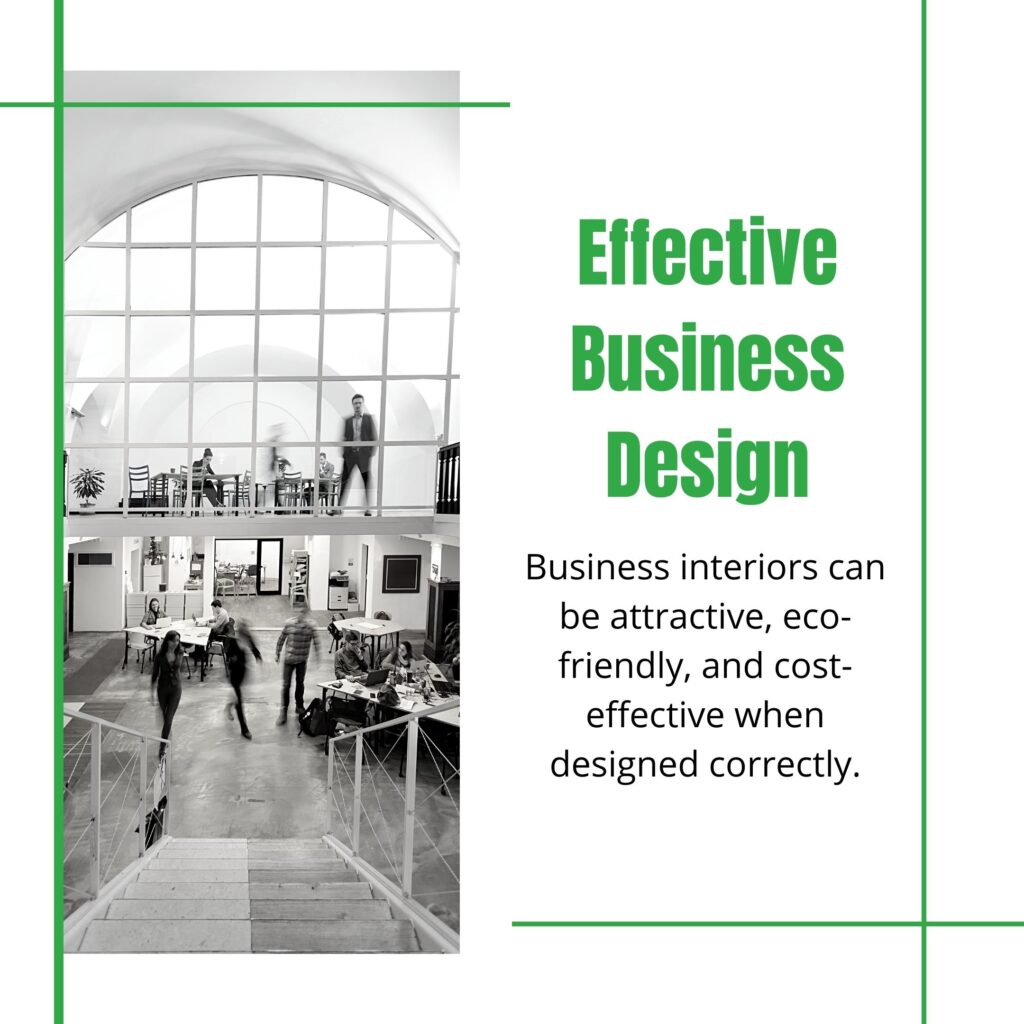
Since COVID-19, workers have developed a desire for greater flexibility in when and where they work. The days of traditional offices that featured tightly-packed cubicles and inflexible spaces were already on the wane pre-pandemic. In their place, offices are opting for flexible workspaces with non-assigned desks and art-filled lounges and cafes. These more open and adaptable work areas create a more relaxed space and establish a collaborative hub that inspires an exchange of ideas.
Today and moving forward, workspaces need to focus on providing flexibility of movement and enhancing the connection to others in that same space, rather than creating barriers between people. These dynamic cultural hubs are not only trendy, they are also cost-effective. Open spaces generally take up less space, require less setup, and reduce equipment needs.
Color should be a major consideration in any workplace design. We know that certain colors can contribute to productivity, inspire creativity, reduce stress levels, and improve mood in a workplace. When adding color to workspaces, it is essential to consider how color interacts with each other and with other elements such as lighting, patterns, and textiles. Being aware of how color impacts a space can transform a dull inviting area into one that positively affects the business space and its users.
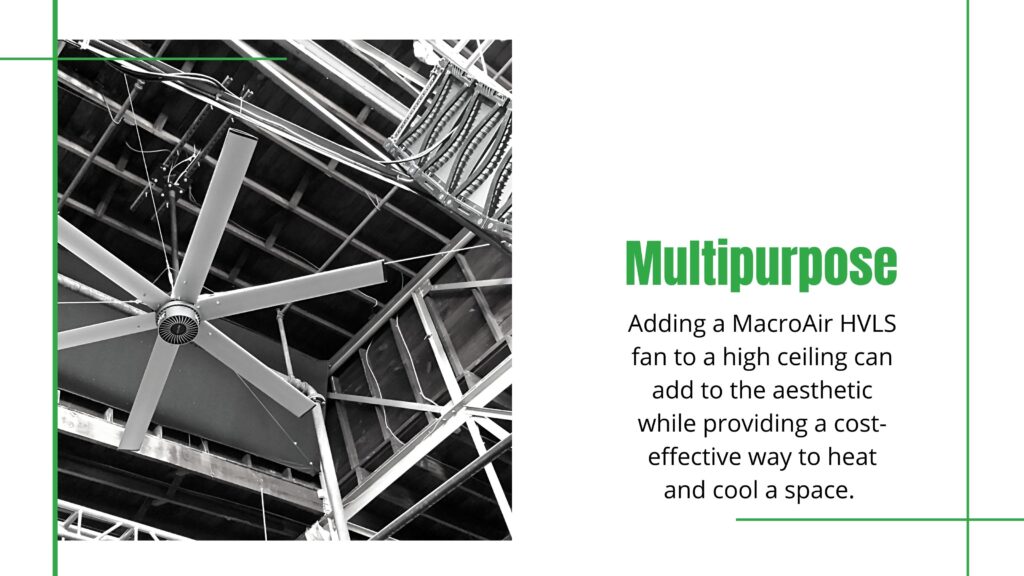
Like the redesigned workspaces that seek to rid offices of cramped, stark cubicles, open ceiling designs are increasingly on the wish list of business owners. This trend has developed in part for people’s desire for space and freedom, especially post-pandemic. Exposing the bones of a building creates the impression of more space and adds to the interior design character. However, creating an appealing vertical landscape requires design consideration and intention. Adding color, installing unique lighting fixtures and adding big fans both enhance the aesthetic and make the space more comfortable for the users below.
Energy-saving equipment is turning heads, too. For example, MacroAir HVLS big fans are cropping up in environmentally aware and trendy restaurants due to their high performance, energy efficiency, and sleek appearance. MacroAir HVLS big fans can be used to cool as well as to warm businesses any time of the year.
Outdated equipment, including fans, heaters, and light systems, are a thing of the past. Now you can have style with cost- and energy-saving benefits. MacroAir HVLS fans are an example of stylish design and energy-saving properties. Solar panels and daylight harvesting also create aesthetic appeal while being considerate of the environment.
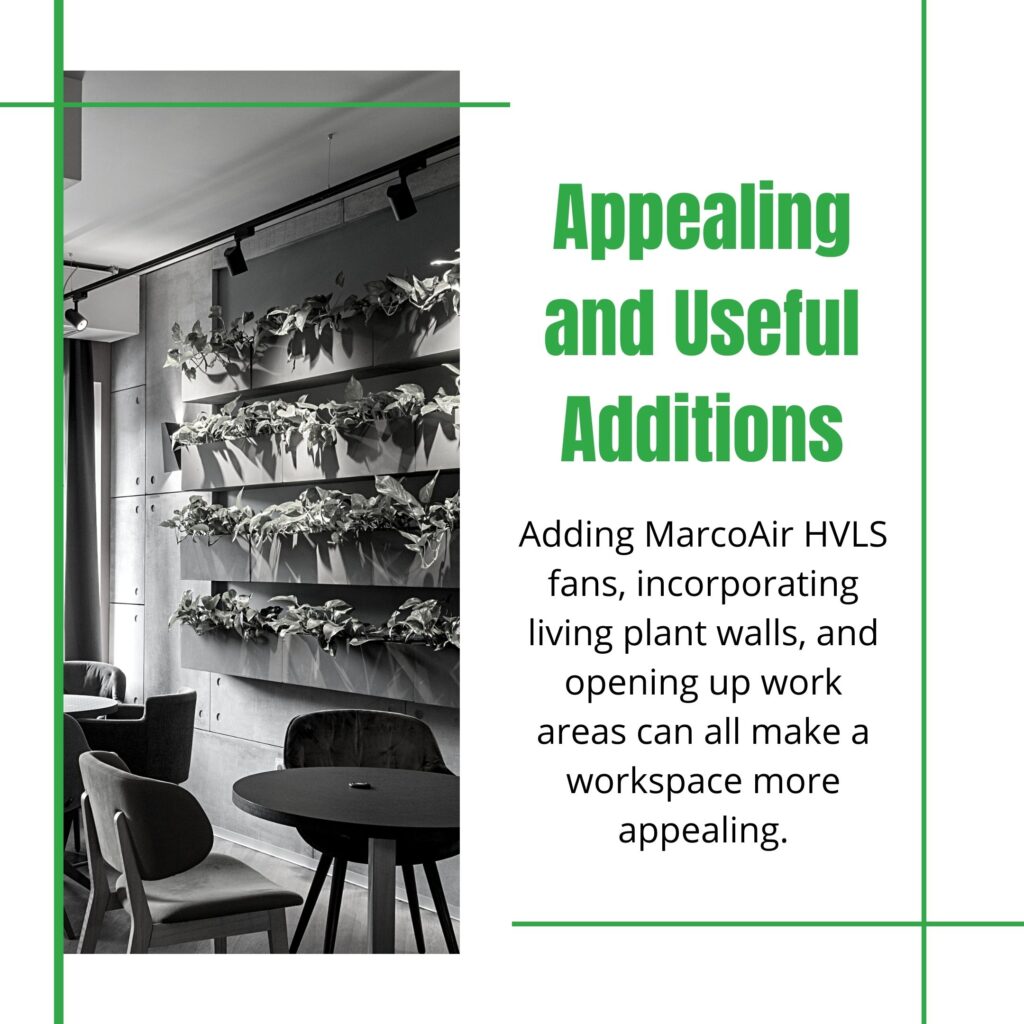
Home and business owners are finding new ways to bring the outdoors in. For example, many spaces now incorporate glass-paneled garage doors or large sliding doors that seamlessly connect the indoors to the outdoors. Other spaces have installed a living plant wall to bring in more greenery and improve a sense of well-being. When established on the outside of a building, living plant walls have vast environmental benefits. Living plant walls remove air pollutants, reduce urban temperatures, and provide thermal benefits to buildings.
Another way the outdoors is coming indoors is through oversized windows. These can be beautiful architectural features. Additionally, floor-to-ceiling windows can take advantage of heat at certain times of the day, making them an efficient solution to energy costs.
Like the implementation of color variety, bringing in multiple texture styles to the office can promote inspiration. Texture variety can be added to office supplies, furniture, and wall décor.
Many offices are beginning to emphasize collaboration over individual work and thus spaces that foster a team environment. Strategic placement of break and conference rooms – for example, having a conference table at the center of a room with workstations – encourages team socialization and productivity.
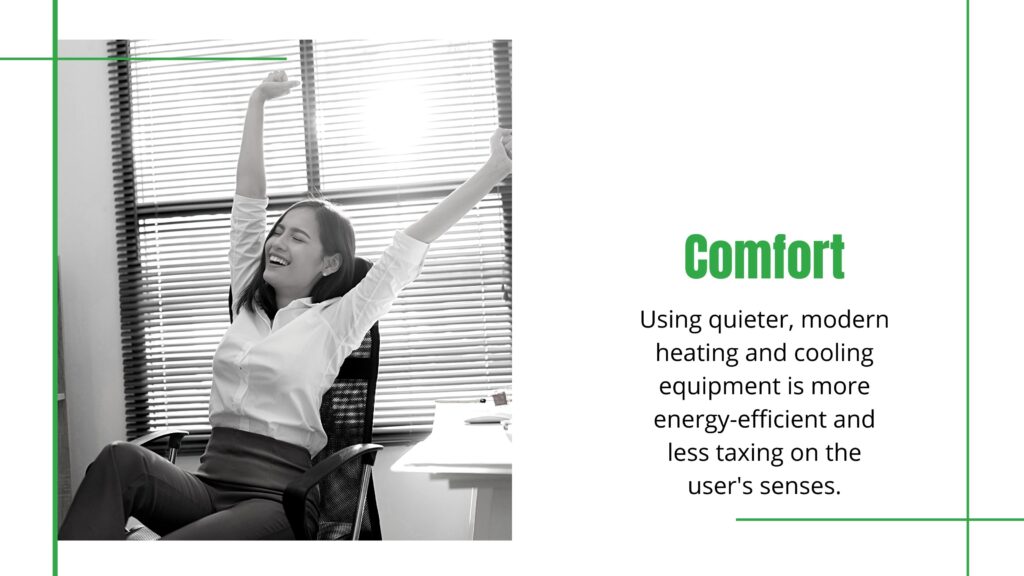
Businesses are also now conscious of purchasing equipment that keeps noise output to a minimum. The reduction of noise fosters a harmonious work environment for staff and customers alike. For example, loud air conditioning sounds can overload the senses and cause mental distractions. In contrast, incorporating a high-volume, low-speed fan with a direct-drive motor offers a quieter, more attractive high-tech cooling solution for modern spaces.
A building’s level of attractiveness can be attributed not only to its physical appearance but also to cost-effective, energy-efficient mechanics. Open spaces, modern equipment, outdoor incorporation, and color schemes are all effective for attractive architecture, environmental responsibility, and energy savings.
We use cookies and similar technologies for site performance, analytics, and marketing. By continuing to browse, you agree to our use of cookies. See our Privacy Policy for details. Learn more