Every year, millions of gallons of used motor oil are generated by automotive shops, truck and car fleets, farms, construction sites, and industrial facilities. What happens to that oil after it’s drained can have a significant impact on a business’s operating costs, and for the enviornment as well. Now, a lot of places that generate waste oil are paying to have it disposed of. However, there’s another way! We’ll take a look at traditional waste oil disposal compared to repurposing used oil for use in a waste oil heater or boiler.
At the end of the day, the choice that’s best for the environment can also be best for businesses, it’s just about learning what makes that choice the winner.
The Environmental Cost of Improper Waste Oil Disposal
Used oil is not biodegradable, it is the byproduct of oil that has been used either in a vehicle or other type of machine and may have impurities. It can no longer be used for its original purpose. Unfortunately, a single gallon of used oil can contaminate up to one million gallons of fresh water if improperly handled. When waste oil is dumped, leaked, or poorly stored, it introduces heavy metals, toxins, and carcinogens into soil and groundwater. So, what do you do with used oil?
Even “proper” disposal methods, such as hauling waste oil offsite for re-refining or incineration, come with environmental costs such as:
● Transportation emissions from collection trucks traveling long distances
● Energy-intensive processing required to re-refine or destroy the oil
● Risk of spills during handling and transport, which the producer may ultimately be responsible for
While recycling used oil is far better than illegal dumping, it still requires infrastructure and fossil fuel consumption to manage safely, not to mention it can be expensive.
Turning a Liability into a Resource
Waste oil heating systems flip the script by using used oil as a fuel source rather than a waste product. Instead of burning new fossil fuels like natural gas, propane, or heating oil, these systems safely and efficiently recover energy that already exists.
From an environmental standpoint, this approach offers several advantages:
Reduced Demand for Virgin Fossil Fuels
Every BTU generated from waste oil is one less BTU that must be produced from newly extracted oil or gas. This directly reduces drilling, refining, and transportation emissions associated with conventional heating fuels. As the price of fuel rises, it can mean the difference between investing in your business or barely making it by.
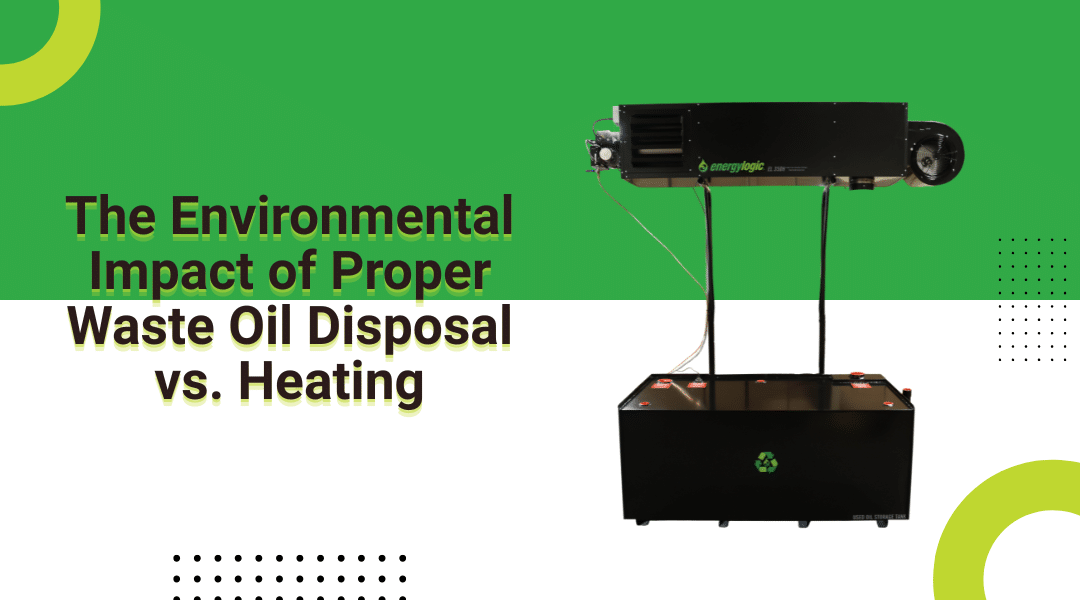
Lower Risk of Environmental Contamination Storing waste oil for heating, in a proper EnergyLogic waste oil tank, keeps it contained on-site, reducing the chance of spills during transport. When managed properly, waste oil heaters eliminate the need for frequent disposal pickups and minimize handling risks.
Cleaner Combustion Than You Might Expect
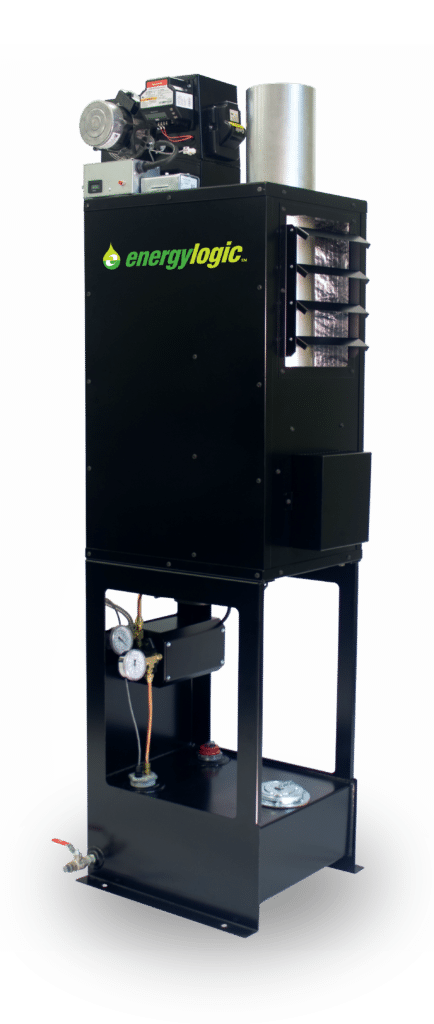
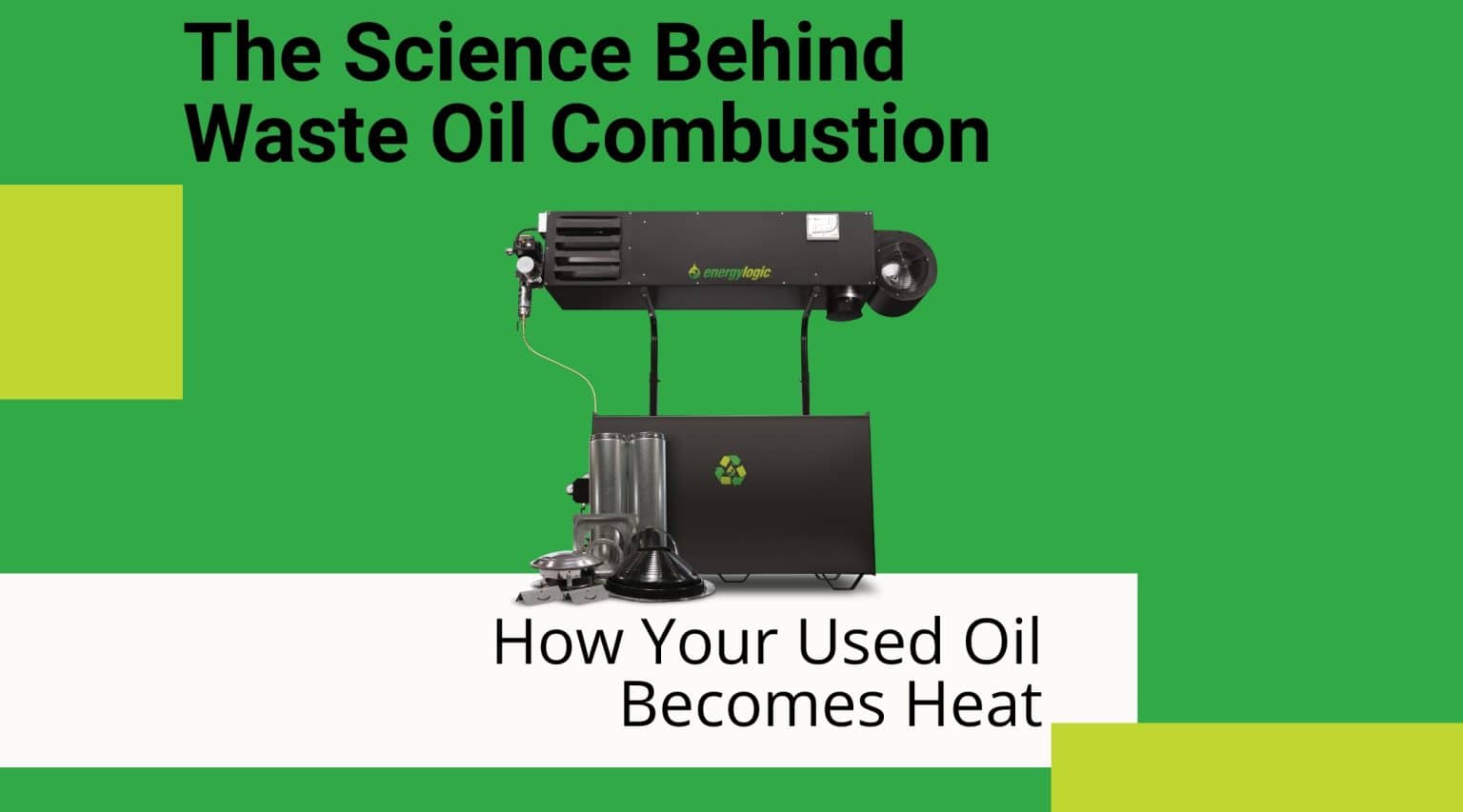
Modern waste oil heaters like those designed by EnergyLogic use advanced technologies such as an onboard air compressor and Accutemp preheater to ensure proper atomization, breaking oil into fine droplets for more complete combustion, and precisely controlling air-to-fuel ratios to minimize emissions and maximize efficiency.
The result is a clean, efficient burn that meets or exceeds regulatory standards when installed and maintained correctly.
Used Oil Disposal vs. On-Site Heating
Critics sometimes assume that burning used oil is inherently dirtier than other options. In reality, poorly managed disposal can be just as harmful, if not more so, over the full lifecycle when you also consider:
● Truck emissions from hauling waste oil
● Energy used in reprocessing or incineration
● Potential environmental damage from leaks and spills
● The cost to small and medium sized businesses to have oil hauled away
● Continued cradle-to-grave liability
For facilities that generate a significant amount of waste oil, on-site waste oil heaters or boilers are the key to avoiding liability, saving money, and promoting a circular economy.
Waste Reduction and Circular Energy Use
One of the biggest environmental advantages of waste oil heating is its alignment with circular economy principles. Instead of treating used oil as a disposable byproduct, it becomes part of a closed-loop energy system:
● Oil is used in equipment or vehicles
● The used oil is safely collected
● That same oil is reused to heat the facility
This reduces waste, cuts emissions, and maximizes the value of existing resources without compromising performance or comfort.
A Practical Solution
For automotive shops, trucking facilities, municipalities, and industrial operations, the choice isn’t just about cost savings (though those are substantial). It’s about responsibility.
Proper waste oil disposal is essential, but when waste oil can be safely and cleanly used for heating, it represents an even better environmental outcome. Less waste, fewer emissions, and reduced reliance on new fossil fuels make waste oil heating a smart, sustainable solution.
Improper disposal of used oil poses serious environmental risks, while even traditional recycling carries hidden energy and emissions costs. Waste oil heating, when done correctly, offers a cleaner alternative by recovering energy that would otherwise be lost.
EnergyLogic systems are designed to make that process efficient, reliable, and environmentally responsible. If you’re already generating waste oil, turning that waste into warmth while reducing your facility’s environmental footprint may be the most sustainable option, using it right where you are.